Lisbon Municipality’s participation in the aim of the BLOSSOM project
17-19 June 2026 in Guimarães, Portugal
General overview
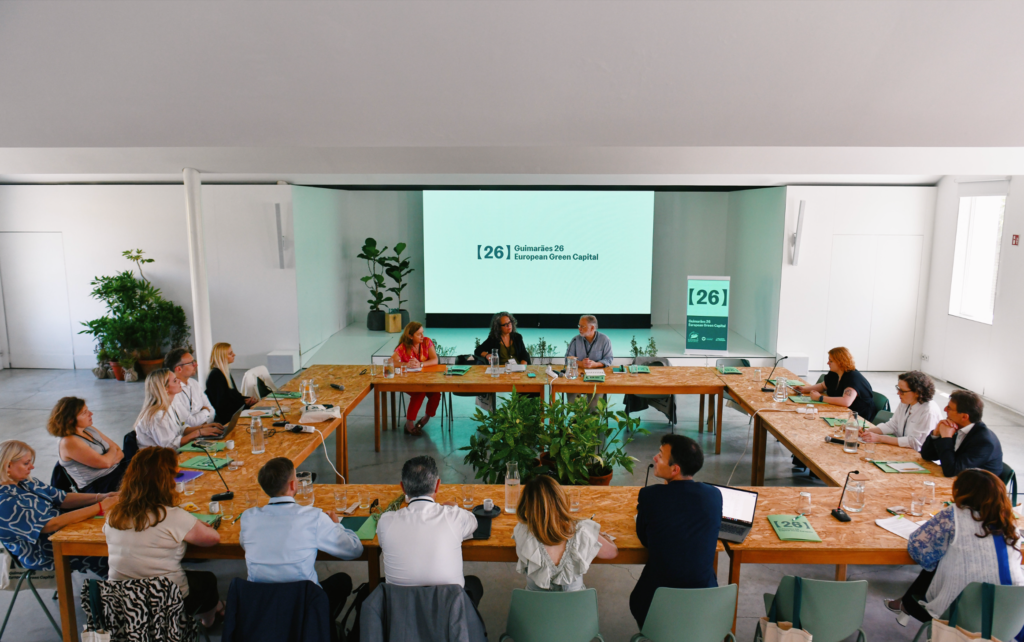
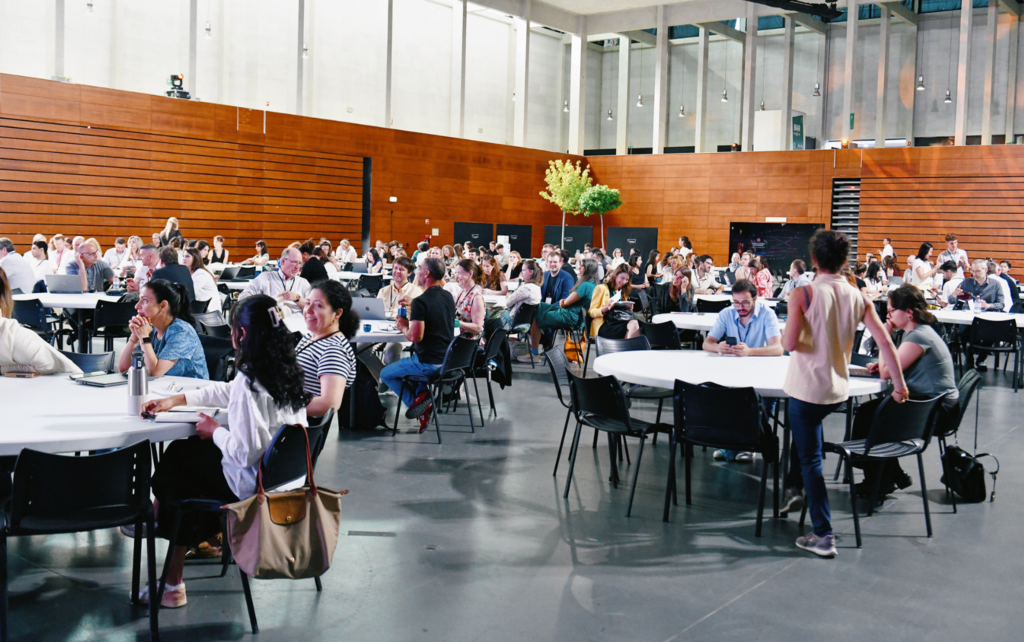
The forum was an excellent opportunity to give visibility to the project and create synergies with other European initiatives. The overall focus of the event was on transitioning from theory to action on the ground, discussing how urban areas can accelerate their adaptation to different risks and climate impacts.
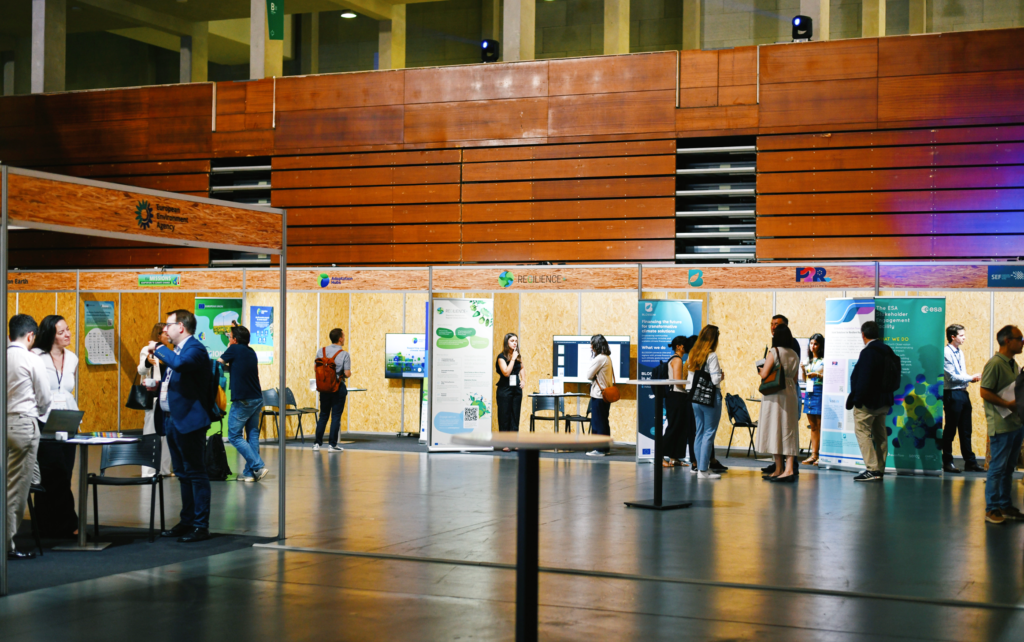
Throughout the event, we had a dedicated exhibition stand where we set up the project’s roll-up and distributed leaflets and other merchandise to publicise it and share its main goals. The stand, alongside some BLOSSOM sister projects, served as a hub to explain the key aspects of the projects, exchange contacts, and discuss urban resilience challenges with attendees.
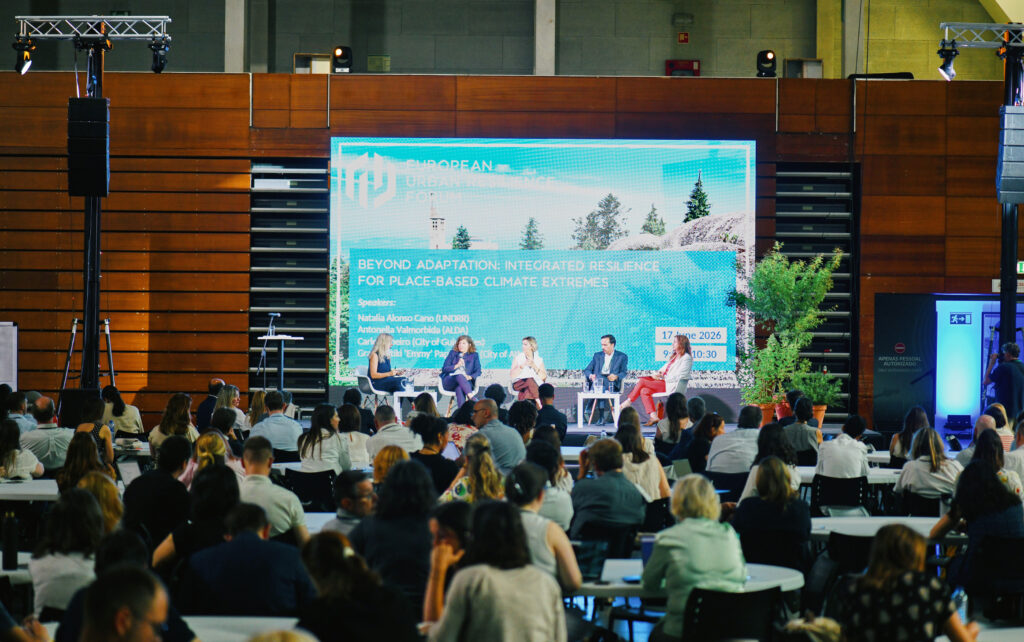
Workshop and Session notes
- Opening the Resilience Toolbox: Solutions for Safer Urban Spaces (plenary session)
- The opening session highlighted the urgency of equipping local decision-makers and technicians with practical, integrated, and easy-to-use toolboxes.
- This session stressed the necessity of examining past events and their individual or compounding impacts to identify solutions and tools that help make the city more resilient to those same effects.
- The session reflects, in a certain way, what is being done in BLOSSOM, particularly within the case studies selected by the Lisbon Municipality and the solutions identified for testing and use, to make sure they can be bankable.
- During this session, the RETIME project (Urban Adaptation and Alert Solutions for a TIMEly (re)Action), in which the Lisbon Municipality is a partner, was also presented. RETIME focuses on mitigating the impacts of natural and human-caused disasters through data-driven tools, developing solutions like a sensor-based automated alert system, a digital building twin, and a resilience knowledge hub. Additionally, a key objective of the project is to translate complex technical data into useful, easily understandable information for both decision-makers and society in general.
- Regional Climate Resilience and Adaptation Pathways: Lessons Learnt and Policy insights from on the ground experience (workshop)
- This was a great sharing moment heavily focused on “on-the-ground” experiences and adaptation pathways adopted at the regional level.
- The discussion focused on how transform learned lessons into effective and lasting local policies. We gathered excellent insights regarding common barriers in implementing resilience measures and community engagement strategies that can be helpful in our project’s pilot regions.
- From megatrends to strategic foresight at local level: Addressing urban resilience (workshop)
- This workshop addressed long-term planning (strategic foresight) in the face of major global megatrends threatening urban systems.
- It highlighted that foresight equips organisations to navigate uncertainty and make more informed decisions, connecting strategic insight with actions and monitoring to shape the future of cities.
- A major focal point was the importance of engaging people – how can we effectively reach the public with these complex themes? The answer discussed was using participatory processes to translate global trends into relatable local scenarios, with the “megacities resilience campaign” presented as a strong example. For our work in BLOSSOM, this discussion reinforces the need to actively involve communities and communicate our solutions clearly to ensure they are understood and adopted.
- Another takeaway from this session was the need to design local strategies that are not merely reactive to current issues but anticipate future scenarios. For us, it underlines the importance of ensuring that the solutions generated within BLOSSOM are flexible and adaptable in the long run and remain bankable.
- Financing climate resilience: Bridging pathways, projects, and investment (workshop)
- Marieta Homann, our BLOSSOM colleague from Climate-KIC, was one of the co-organisers of this workshop.
- The session focused on the critical challenge of closing the gap between climate resilience planning and actual funding. It explored how to translate adaptation pathways successfully into concrete, investment-ready (bankable) projects.
- This issue is relevant to what we are doing in Lisbon, as it reinforces that the structural and resilience solutions we select must not only be technically sound but also financially viable to attract the necessary investments for implementation.
- During the session, the specific topic we brought to our working table was finding a financially viable solution for the flooding problem in Lisbon – specifically, the implementation of anti-flooding barriers. Working through this concrete example with the group helped us identify the key factors and arguments needed to present this solution in a way that makes it bankable and attractive for investment.
- Scaling What Works: Finance and Tools for Resilience Beyond Pilots (closing session)
- The final session touched on a major challenge all projects face: financing and the sustainability of solutions after the initial funding period ends.
- The debate focused on how to scale measures (moving from pilot projects to broad policies) and explored new financial instruments and support tools. This is a crucial point for us to start thinking about BLOSSOM’s legacy and how the solutions tested in our case studies can gain scale and be applied in the future.
Liliana Oliveira and Miguel Inácio
Lisbon Municipality