- How do changing weather patterns (rain, heat, or storms) affect your daily life or neighbourhood?
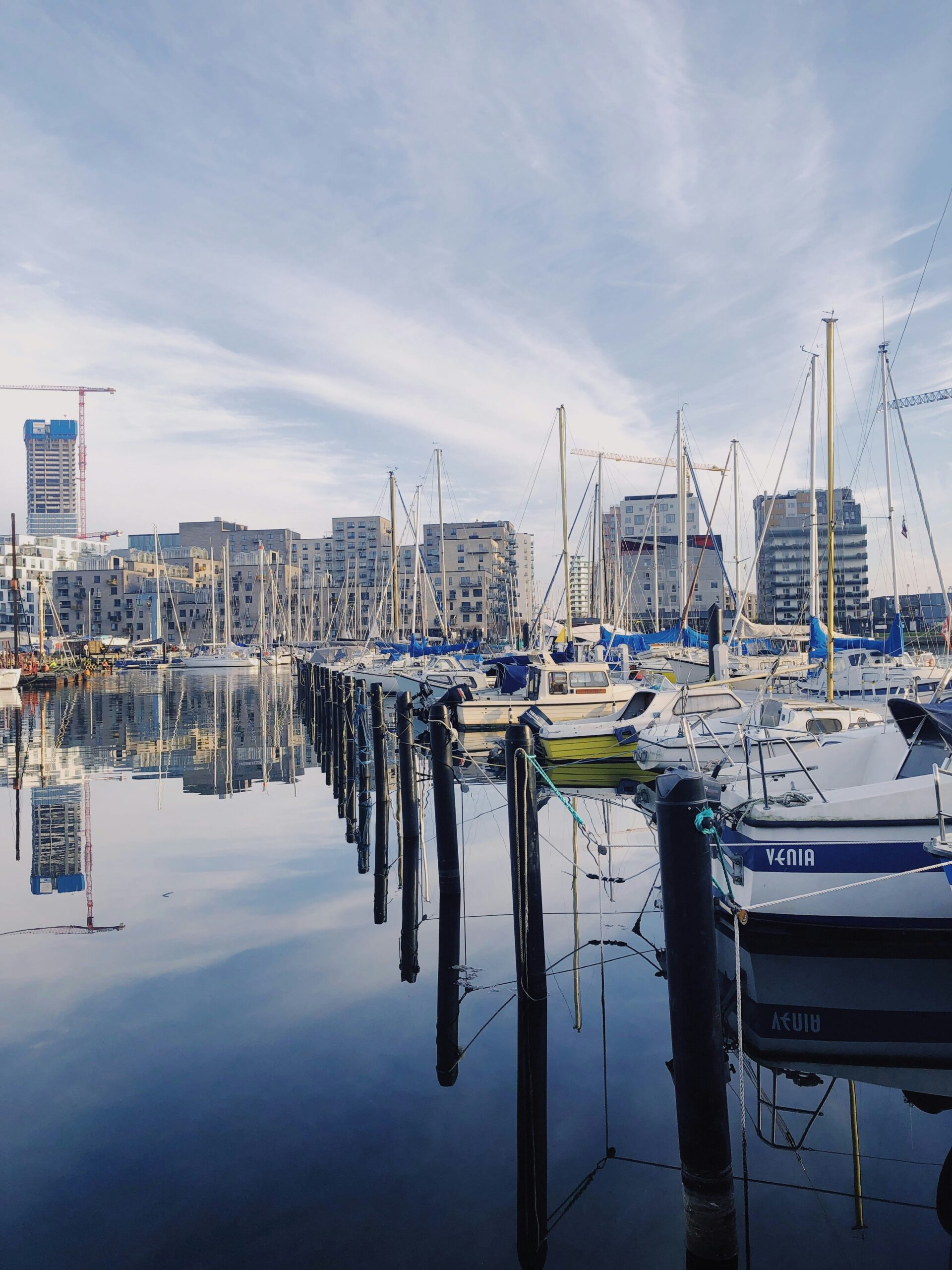
The most visible effect of climate change for citizens in Aarhus is flooding. Flooding can occur in different areas due to three types of events, either individually or simultaneously: cloudbursts, rising groundwater, and elevated sea levels.
- Surface water
Surface water can increase significantly during cloudbursts. Aarhus is partly located in a river valley with slopes and flow paths from both streams and surface runoff. Historically, it has been an area with larger water bodies, where there was once a much wider river outlet.
- Groundwater
The challenge of high groundwater levels is expected only to increase in the future, as a result of climate change. We can expect groundwater levels to rise by a further 10 cm by the year 2100 – during the winter period.” Quote GEUS.
- Sea water
Climate change means that the average global sea level is rising. Future sea levels will therefore be higher than those we experience today. Rising sea levels and the severe weather associated with climate change will increase pressure on Danish coasts. Coastal erosion and the risk of flooding from the sea will intensify. When flooding, high groundwater, and storm surge coincide, the risk of flooding increases considerably. Flooding is already affecting buildings and infrastructure during extreme events.
- Costs
Damage costs may reach high amounts, which we will investigate through BLOSSOM; at the same time, we will explore opportunities with insurance companies (and banks) to reduce risks in their business – and perhaps even contribute to financing solutions that can reduce risks. The Danish Urban Development Knowledge Centre cites a report by COWI, prepared for Realdania in 2017, which estimates the total damage costs for Aarhus at DKK 6 billion up to 2117 if no action is taken to protect vulnerable assets and areas against storm surges and projected sea-level rise. 6,000,000 DKK equals €800,000.
- BLOSSOM promotes nature-based and climate-resilient solutions. Where should these be prioritised in Aarhus?
- The Climate Plan
Nature-based and climate-resilient solutions are prioritised in the Climate Plan. Climate-neutral (net zero) Aarhus by 2030. 8,000 hectares of Water and Nature Parks in a ring around the city centre, where nature and biodiversity (forest, low-lying land, open areas) are prioritised over agriculture, urban development, and technical facilities (e.g. solar panels). This implies that, on a voluntary basis, half of the agricultural land area will be reduced to one third. The 8,000 hectares will encircle the City of Aarhus in a semicircle of selected areas designated for nature with multifunctional solutions (Water and Nature Parks). At the same time, land prices are kept under control.
- Aarhus Climate Adaptation Plan
2024–2030 shows the way towards a city that is more resilient to future weather. The plan contains 12 concrete climate adaptation initiatives – from new solutions in the city centre to nature-based projects in the open countryside – and is based on strategic principles to:
- create time and space for water,
- ensure a good city for all,
- integrate climate adaptation with socio-economics and synergies,
- strengthen innovation and collaboration.
Maden is a designated Water and Nature Park (and is considered one of three particularly important areas) for both technical (water retention) and nature-based solutions – in order to address extreme rainfall events.
- What role do nature and outdoor areas play for you in staying healthy and comfortable?
City councillors prioritise that everyone in Aarhus Municipality should have access to green areas within 500 metres. Aarhus Municipality has an Outdoor Strategy for 2022–2029. Aarhus Municipality’s first outdoor strategy aims to pave the way for more outdoor activities and new meeting places. More people should benefit from the many exciting experiences and communities that outdoor Aarhus and its surroundings have to offer. Aarhus has a unique location by the bay and forest. Nature, the city, and the surrounding areas invite activity, movement, and community. The outdoor strategy aims to make the best of Aarhus even better. Aarhus ranks at the top of the top 15 municipalities measured by average score for facilities for forest sports and water sports.
- Invest4Nature
In the EU Horizon project Invest4Nature, researchers have conducted a meta-study on the cost-benefits of nature-based solutions and identified qualitative benefits of nature for health and social well-being. A brief has currently been written by Wenting Chen et al.: “Social benefits and costs of NbS – a perspective of economic insurance value of ecosystem resilience against climate change and disaster risk reduction”. Scientific articles are forthcoming.
- Do you feel that projects like BLOSSOM reflect citizens’ needs and everyday experiences?
BLOSSOM reflects a need for funding beyond that allocated by the City Council. There is a need for external co-financing. We have experience with co-financing through partnerships with both public and private companies or non-profit foundations. We see a need to expand towards solutions that are bankable and insurable. This implies developing business models within solutions that are attractive to banks, insurance companies, and investors. It is not a simple task, but it is important, as there is a significant need for co-financing over the coming years.
How can cash flow or ROI be created? What incentive does a bank or an insurance company have to contribute to solutions that can minimise risks?
External co-financing can be seen in light of: Citizens have a need for protection against flooding or against the financial effects of flooding. At the same time, the need for access to nature with social benefits and health effects may potentially increase. Farmers may potentially be supported in converting agricultural land into nature.
City of Aarhus, Mette Holm,
Project manager, LinkedIn